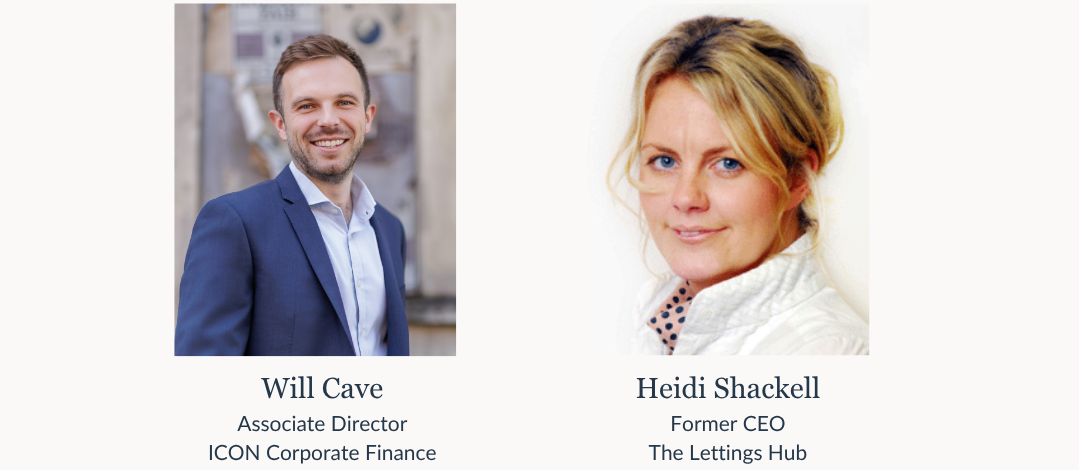
An interview with Heidi Shackell, former Lettings Hub CEO: Dialled In edition #5
12.10.2025
Welcome to edition #5 of Dialled In – exploring the psychology behind entrepreneurship, decision-making, and scaling for exit.
Today’s guest is Heidi Shackell, the former CEO of The Lettings Hub, a UK-based tenancy management platform serving the residential lettings market.
During her tenure, Heidi scaled the business into a leading provider of referencing, insurance and compliance solutions. Heidi led the company through a period of sustained growth with a leadership style defined by measured decision-making, operational discipline and a strong emphasis on balancing the needs of employees, customers and shareholders.
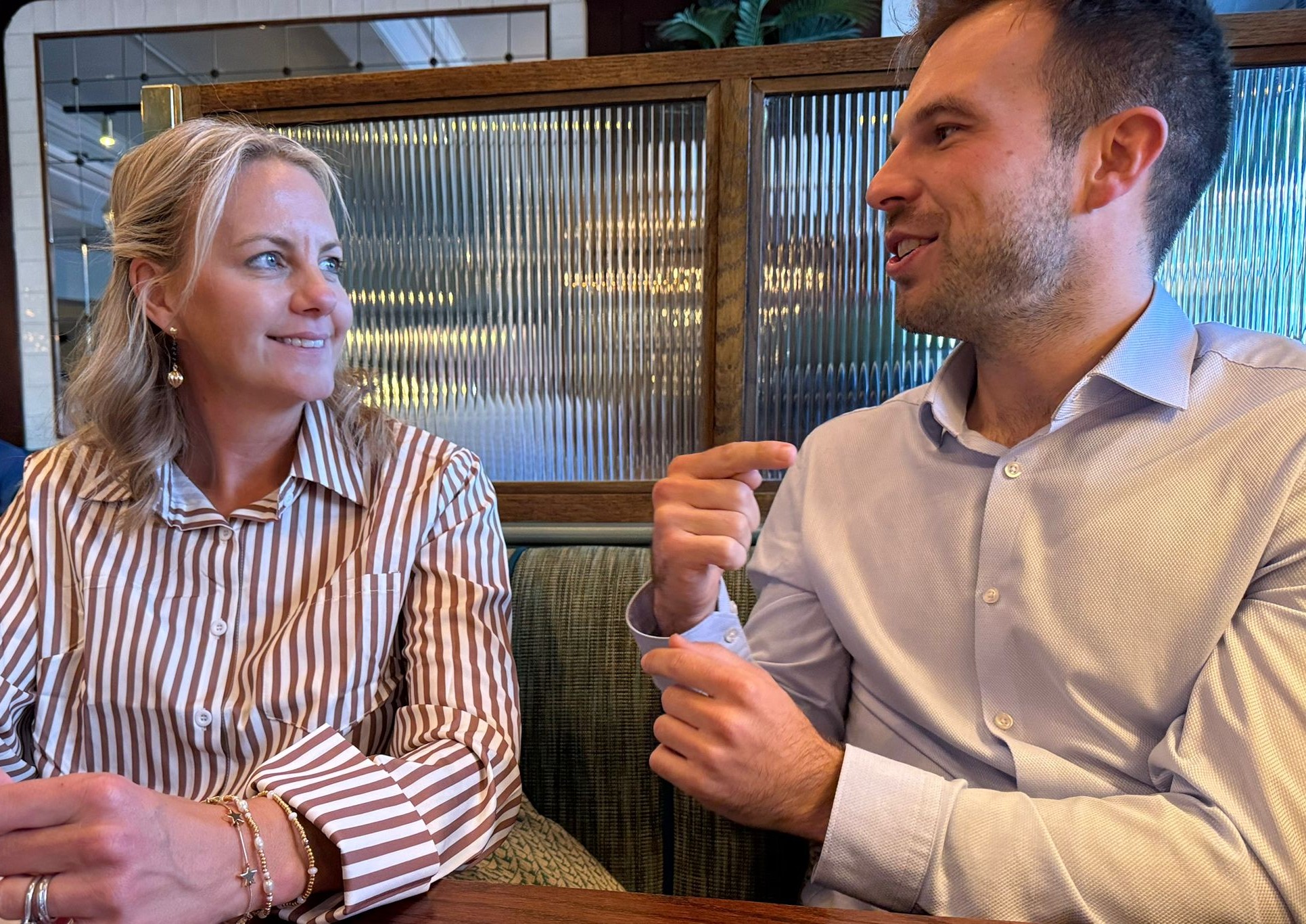
ICON's Will Cave sat down with Heidi...
How do you make the big decisions in business?
First rule: I always sleep on them. Even if I think I know the answer immediately, I’ll usually give it at least one night and see if I wake up feeling the same way. Big decisions made emotionally or too quickly are rarely better because they were fast.
Second, I’ll speak to a small number of people whose judgement I really trust for that specific decision. Not necessarily my direct team either. Sometimes it’s someone outside the business, sometimes it’s somebody much deeper in the organisation who’s closer to the detail, sometimes it’s one of my exec team.
Importantly, I try not to lead them toward an answer. I’ll give them the problem or the question, not my conclusion, because I want to see whether they naturally arrive at the same view or bring a completely different perspective.
It doesn’t mean I’ll always do what they suggest, but it’s a really good way of stress-testing your thinking. You’re trying to work out: am I right, am I wrong, or am I missing something obvious?
And alongside all of that, I’ve learned to trust my instincts. Usually if something felt wrong deep down, it was wrong. Experience gives you pattern recognition, even when you can’t fully articulate it yet. Some of the decisions I regret most are probably the ones where my gut was warning me early and I ignored it because I wanted the answer to be different.
The other thing I’ve learned is that the best big decisions are rarely crisis decisions. I always tried to spot important decisions early enough that I had time to gather information, think clearly and create options, rather than waiting until the business forces a rushed answer.
How did you foster a culture where people speak honestly?
I never really bought into the idea that great teams are built on harmony. People are different -that’s the whole point. You hire individuals for different strengths, perspectives, and personalities. As long as everyone shares the same core values and intent, a bit of tension is actually productive.
In fact, I often enjoyed it when people debated things properly. It meant they cared enough to challenge ideas rather than just go along with the consensus. We talked about things very openly as a team. People had context, they weren’t operating in silos, so everyone could form an opinion and contribute meaningfully.
Trust sat underneath all of it. We worked with a senior team coach – highly recommend him, by the way – who talked a lot about the trust equation: reliability, credibility, and low self-interest. People knew nobody was optimising purely for themselves, which changed the dynamic completely. Even when discussions got heated, people listened to each other because they trusted the intent behind the argument.
And honestly, we just didn’t have time for politics. I’ve never had much tolerance for wasted energy with no real outcome. If there was disagreement, great – argue it through, make the decision, move forward. The focus was always on building the best thing possible, not protecting egos.
There was definitely bickering, but never anything toxic. And honestly, we’d argue just as passionately about what snacks should be in the kitchen as we would about the next feature we were shipping. That balance kept the culture human.
What's the "one that got away" in your career?
I’ll answer that slightly differently. My biggest frustration is probably speed. Not that we made bad decisions, but that I wish we could’ve moved faster on some of them. Faster execution. Faster hiring. Faster product development. Sometimes we simply didn’t have the resources. We had 15 developers, not 30. We had ambitious plans, but not always the capital to accelerate them at the pace we wanted.
What I realise now, having gone through an exit, is that our business story was actually much stronger than we gave ourselves credit for at the time. It only really clicked when we started articulating it externally. That process gave the whole company more confidence. Looking back, maybe we didn’t always believe in ourselves enough. And you do wonder – if we’d had that confidence earlier, what more could we have achieved?
The other “one that got away” is people. I think about some of our early employees who left over the years, sometimes after being with us a long time, but I always felt that if the company reached a certain stage, they’d fit back into it brilliantly.
The challenge when you’re starting out is that you simply don’t have all the roles yet. You can’t always offer the progression, structure or financial package people need at that point in their careers, even if you know how valuable they are long term.
So sometimes the business didn’t grow as quickly as the people inside it did – which is brilliant for them, by the way – and some eventually came back. But if you picture your ideal team at any moment in time, it often includes people who aren’t there anymore.
I think that’s one of the hardest things about building a company. Businesses evolve in stages, and people do too. Sometimes the timing just doesn’t line up, even when the respect and belief in each other is still there.
What keeps you up at night?
People, first. Not just my exec team – everyone. We had around 140 employees and I knew all of them by name. Usually a lot more than that too. And you realise very quickly that work is only one part of people’s lives. At any given moment, someone is dealing with something outside the office – family pressures, financial stress, relationship issues, health worries, confidence problems, all the normal human stuff.
We always tried to help where we could, because you can’t expect the best version of someone at work if everything outside of work is falling apart. Sometimes that was flexibility, sometimes support, sometimes just listening properly. A big part of leadership is recognising that people don’t leave their lives at the door when they come into work.
Then customers. If I had a customer meeting the next day, I’d already be thinking about how we could be better. An old manager once taught me “the power of one” – treat every meeting like it’s the only customer you have. I still think that way. I’d be tweaking presentations in taxis or on trains right up until the last minute because I wanted every interaction to feel exceptional.
And then there’s shareholders. You carry the weight of what people want the business to unlock for their lives – security, freedom, travel, family, things they may have waited years for. Before board meetings, I was never really worried about the meeting itself. I was thinking: have we genuinely moved the business forward in the last 30 days? If I felt we hadn’t, I’d take that personally.
We used to describe it internally as a three-legged stool: employees, customers, shareholders. If one side gets neglected, eventually the whole thing becomes unstable.
Who do you rely on?
A couple of people in my exec team who were brutally honest. Painfully honest sometimes – not because they’d tell me something I didn’t want to hear, but because they wouldn’t give me the answer I wanted. But I kept asking them anyway, because I relied on that honesty.
The people who challenge you properly are usually the people who care the most. A lot of employees across the business were the same. Very direct, very unfiltered, which I appreciated. I never wanted to be surrounded by people who just agreed with me.
And I spoke to my Chairman constantly. We had a very open relationship where we could say anything to each other. There was a real “no surprises” culture between us. If something was going wrong, we talked about it early. If I was worried about something, I’d say it. If he disagreed with me, he’d say it. That level of trust matters because it stops problems becoming bigger than they need to be.
One of his biggest strengths was making difficult problems feel solvable through calmness, perspective and communication. Sometimes I’d walk into a conversation convinced something was catastrophic, and he’d simply remind me: “You haven’t done anything wrong. We have a good business. We’re trying to do the right thing. Just because it hasn’t worked yet doesn’t mean it can’t be fixed.”
And then, in a completely different way, I relied on my animals. They remind you that work is part of life, not the whole thing. Walking the dog, feeding sheep, stroking a duck – it forces you outside your own head. The minute you’re in a different environment, you think differently.
At the moment we’ve got 29 animals – cats, dogs, sheep, goats, ponies, chickens, ducks, guinea pigs and rabbits. Most of them are rescues or rehomes. It’s chaos, but calming chaos. Perspective. A reminder to “be more GOAT”.
In this series, we ask each of our guests to share a question of their own, which will be put to the next participant to be answered. Bunch CEO, Elliott Herrod-Taylor asked:
As a business leader, how do you balance making yourself redundant to build a scalable business for exit, while still fulfilling your personal drive to build? How do you avoid flip-flopping on strategy and instead create a business that’s scalable and valuable at exit?
One of my weaknesses is that I probably stayed too involved for too long in certain areas. The upside was that I understood what was happening across the business. I stayed close to customers, close to the product, close to the detail. It meant I could often spot opportunities or problems early.
The challenge is making sure your involvement adds value rather than creating dependency. There’s a fine line between being engaged and becoming a bottleneck.
I always think about it a bit like gardening. My job is to plant, prune and water – not be the plant itself. If the business relies on me as the only source of energy, it isn’t scalable. You need more suns. And we had lots of them – people across the business who genuinely cared and wanted everything to be brilliant.
I do always have a longer-term direction in my head, and I’ll share that openly, but realistically 95% of our energy and conversations went into the next 12 months. Scaling a business isn’t really about big visionary statements day-to-day. It’s laying bricks. Building foundations. Hiring well. Improving processes. Moving forward consistently.
The long-term vision keeps everyone aligned. The short-term focus is what actually keeps the business alive and growing.